As a senior backend mathematics auditor for the European iGaming sector in 2026, my entire career revolves around analyzing the cryptographic algorithms that govern casino payouts. Every single day, I encounter the same persistent myth: the belief that players can visually decode a slot machine. When reviewing session replays from top-tier platforms like bassbet-casino-greece.gr, I constantly observe players altering their bet sizes based on perceived visual sequences-a zigzag of premium symbols, a sudden cluster of wilds, or a series of tantalizing near-miss scatters. They believe the machine is “teasing” a jackpot or following a predictable geometric pattern. Today, I am going completely off the standard PR script to dismantle this neurological illusion. I will take you directly into the server architecture, expose the mechanics of Pseudo-Random Number Generators (PRNG), and explain the mathematical reality of volatility clustering to answer the ultimate question: Can you actually predict a slot machine win?
The Architecture of Pseudo-Randomness (PRNG)
To understand why visual patterns are entirely useless for prediction, you must first understand how a modern slot machine actually generates an outcome. The spinning reels you see on your OLED smartphone screen are nothing more than a high-definition video file rendering a predetermined mathematical hash.
The Millisecond Cryptographic Polling Rate
In 2026, regulated slot machines do not operate on mechanical probability; they operate on Quantum-Resistant Pseudo-Random Number Generators. Deep within the game provider’s secure cloud servers, a continuously running algorithm is generating millions of complex cryptographic number sequences every single second, even when nobody is playing the game.
When you press the “Spin” button, you are not setting physical reels into motion. Instead, your device sends an API request to the server, which captures the exact cryptographic seed generated at that specific microsecond. That seed is instantly translated by the game’s math model into a grid outcome. If the seed dictates that you will win €0, the game software calculates the most visually entertaining way to show you a €0 result on the grid. The symbols you see are the result of the math, not the cause. Therefore, a zigzag pattern of symbols on spin number 10 has absolutely zero mathematical correlation to the cryptographic seed your finger will capture on spin number 11.
Visual Patterns vs. Algorithmic Clustering
If the RNG is completely random, why do players swear they see patterns? The answer lies at the intersection of human evolutionary psychology and advanced software engineering. The human brain is hardwired to find patterns in chaos-a cognitive bias known as apophenia. Game developers exploit this biological trait using highly sophisticated algorithmic visual mapping.
The Illusion of the “Near Miss”
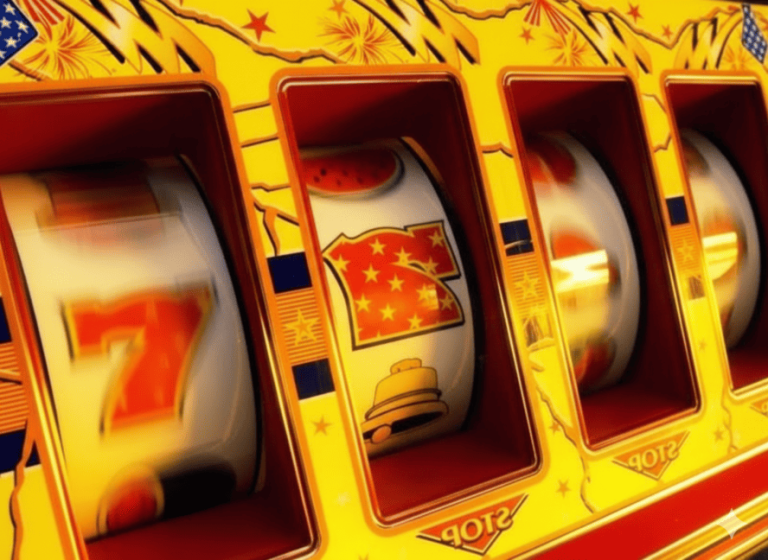
The most famous “pattern” players think they can read is the “near miss”-when two scatter symbols land on the first two reels, and the third reel spins in dramatic slow motion, only to land one space away from the final scatter. Players assume this means the bonus is “getting closer” and the machine is “warming up.”
From a backend perspective, the near miss is a calculated algorithmic presentation. The game software utilizes Weighted Virtual Reel Strips. The API intentionally selects non-winning seeds that render two scatters to trigger a dopamine spike in the player, encouraging them to keep betting. Mathematically, landing two scatters does not mean you were close to a bonus; it just means the RNG selected a seed designed to display two scatters. The probability of hitting the third scatter on the next spin remains completely unchanged.
Volatility Clustering: The “Hot and Cold” Reality
While visual symbol patterns are fake, algorithmic “states” are very real. Modern 2026 slots utilize dynamic variance engines. While the RNG seed generation is independent, the distribution of those seeds is mapped over billions of spins. Because games are highly volatile, winning seeds and losing seeds naturally cluster together in the mathematical timeline.
Here is a breakdown of how human perception misinterprets backend algorithmic realities:
| Player’s Visual Perception | Backend Algorithmic Reality | Predictive Value |
| “The game is dropping V-shape patterns.” | The rendering engine is utilizing adjacent grid logic to display a predetermined dead spin. | Zero. Purely aesthetic rendering. |
| “I just got three near-misses in a row; the bonus is due.” | The RNG hit a cluster of “teaser” seeds specifically weighted to increase session length. | Zero. The next spin probability is identical. |
| “The game is completely dead, no symbols are connecting.” | The algorithm is cycling through a deep variance trough, suppressing hit rates to fund a high RTP pool. | Low. It signifies high variance, but does not predict the exact end of the trough. |
| “A persistent meter is 99% full.” | The Stateful Logic engine has allocated an escrowed RTP percentage to the next trigger event. | High. This is mathematically calculable Expected Value (EV), not a visual guess. |
As the table shows, the only time you can “predict” an outcome is when you are dealing with Stateful Logic-games where you physically collect tokens to trigger a feature. In these specific games, the math model shifts, and your probability of a return increases as the state nears completion. But for standard, stateless spins, the clustering is mathematically random and completely invisible to the naked eye until after the spin has resolved.
Can Machine Learning Predict a Slot Outcome?
With the explosion of artificial intelligence in 2026, a massive black market has emerged offering players “AI Prediction Bots” that analyze slot patterns through screen scraping. Players run these programs over their casino windows, hoping the AI will spot a geometric pattern in the falling symbols and alert them when to raise their bet.
As an auditor, I can definitively state that these tools are fundamentally useless for predicting RNG outcomes. They fail because they are analyzing the wrong data. An AI watching the visual symbols on the screen is like an AI watching the paint dry on a car to predict the engine’s horsepower. The visual interface is completely decoupled from the server-side seed generation. Furthermore, because modern casinos utilize SSL/TLS 1.3 encryption and API masking, the AI cannot intercept the actual cryptographic handshake between the server and the game client. The machine is blind to the future, and therefore, so is the player, regardless of how much computing power they throw at the screen.
Frequently Asked Questions
1. Do zigzag patterns on the grid indicate a coming bonus round?
Absolutely not. Zigzag patterns, matching corners, or any other geometric arrangement of symbols on a dead spin are the result of the visual rendering engine translating a losing cryptographic seed. The developers program the engine to display “near-wins” to keep the visual field stimulating. These patterns have zero predictive correlation to the RNG seed that will be generated on your subsequent spin.
2. Can AI or scraping bots predict the next RNG seed?
No. The RNG operates on secure, isolated cloud servers using quantum-resistant cryptographic algorithms. Screen-scraping bots only see the visual output after the server has already calculated the math. Because the polling rate of the RNG generates millions of seeds per second, it is physically and computationally impossible for an external AI to predict exactly which microsecond your device’s API call will hit the server.
3. Why do I always get dead spins immediately after a massive win?
This is an algorithmic feature known as Hit Rate Suppression, common in highly volatile 2026 math models. After a massive payout, the game’s variance engine often enters a deep statistical trough to balance the short-term localized Return to Player (RTP). While the RNG is still technically random, the virtual reel strips active in this specific variance phase are heavily weighted with blank spaces and low-tier symbols, leading to the perception of a “cold” streak.
4. Does stopping the reels manually alter the RNG outcome?
No, manual stopping is purely a visual illusion designed to give you a false sense of agency. The exact millisecond you press the initial “Spin” button, your device captures the RNG seed, and your final payout is already recorded in the casino’s database. Slamming the button to stop the reels merely fast-forwards the graphical animation; it does not change the cryptographic hash that was assigned to that spin.
5. Is it true that slots pay more at specific times of day in Greece?
This is a persistent myth based on a fundamental misunderstanding of network velocity. Slots do not have internal clocks that make them “looser” at 8:00 PM. However, during peak Greek evening hours, the volume of total bets across the network increases massively. Because thousands of players are pushing the RNG through its mathematical cycles faster, you will see a higher frequency of jackpots and major wins dropping on the global feed simply due to the sheer volume of mathematical requests, not because the individual probability has changed.
6. How does the Hellenic Gaming Commission test for pattern predictability?
The HGC requires game providers to submit their RNG source code to independent testing laboratories like BMM Testlabs or eCOGRA. These labs run the algorithm through extreme stress tests, simulating over 10 billion spins. They utilize advanced statistical analysis tools, such as the Dieharder suite, to ensure that the distribution of outcomes shows absolutely no predictable sequencing, geometric symbol mapping, or exploitable cryptographic patterns.
7. What is “RTP Compensation” and does it create winning patterns?
RTP Compensation is a legacy theory suggesting that if a slot pays out less than its advertised 96% RTP over a week, it is forced to “compensate” by paying out massively the next week. Modern 2026 algorithms do not use short-term compensation. The 96% RTP is calculated over billions of spins. The machine does not “know” it owes you money and will not suddenly generate a pattern of winning spins just to balance its localized daily ledger.
8. Do different bet sizes change the RNG sequence?
Changing your bet size does not change the underlying global RNG algorithm, but it does change your interaction with it. In many modern architectures, each bet denomination (e.g., €0.20 vs. €2.00) operates on its own localized mathematical node to prevent players from grinding a high-volatility state on a low bet and switching to a high bet for the bonus. Therefore, altering your bet size essentially moves you to a different mathematical track, meaning the sequence of outcomes will inherently differ.
9. Why do demo versions seem to have more predictable winning patterns?
In regulated 2026 European markets, demo games are legally mandated to operate on the exact same RNG math model as the real-money versions. If a demo feels more predictable or looser, it is purely a cognitive bias. Because you are playing with fake money, you do not feel the psychological pain of dead spins, and you tend to play much faster and take riskier Bonus Buys, which artificially accelerates the progression of the variance timeline, making the wins feel more frequent.
10. Can I track standard deviation to know when a slot is “due”?
You can track standard deviation to analyze the long-term behavior of a progressive jackpot pool, but not an individual slot machine spin. The concept of a machine being “due” is the classic Gambler’s Fallacy. Because each spin is statistically independent, a slot machine that has not triggered a bonus in 800 spins has the exact same mathematical probability of triggering a bonus on spin 801 as it did on spin 1. The RNG has no memory of your previous suffering.
Conclusion
The pursuit of visual slot patterns is an exercise in profound mathematical futility. The gaming industry in 2026 operates on a level of cryptographic sophistication that completely overrides human visual perception. When you stare at a grid of cascading symbols, attempting to decode a hidden sequence in the way the wilds land or the scatters tease, you are falling victim to a highly engineered psychological trap. The game providers have built these rendering engines specifically to trigger your apophenia, feeding your brain the exact visual stimuli required to make random chaos feel like a solvable puzzle. The harsh reality is that the outcome of your session was determined by a quantum-resistant cryptographic hash generated on a cloud server milliseconds before the first virtual reel even began to move. There is no pattern on the screen because the screen is merely a delayed video broadcast of an invisible algorithmic decision.
To survive and thrive in the modern casino landscape, players must fundamentally shift their perspective from visual pattern recognition to strict mathematical variance management. You cannot predict the next spin, but you can manage your exposure to the algorithm’s volatility. Advanced players succeed not by spotting geometric shapes, but by understanding the backend mechanics: identifying Stateful Logic games where the RTP shifts in the player’s favor, utilizing strict stop-loss limits to survive deep variance troughs, and knowing exactly when a progressive network reaches critical velocity. The truth about slot patterns is that they do not exist. Once you accept this mathematical absolute, you stop playing the developer’s visual mind games and start playing the actual numbers.